AI-Generated Questions: An Answer-Checking Checklist
09/10/2026 · NSAGPT Editorial Team 3 min read
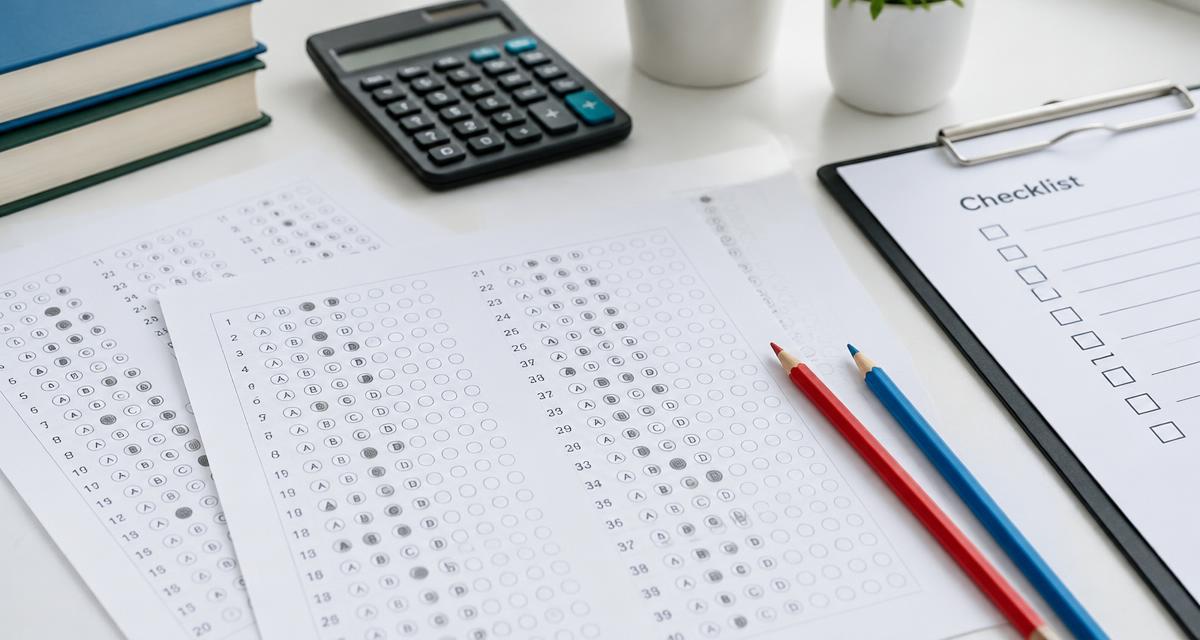
Check AI questions for factual errors, ambiguous MCQs, missing conditions and unfair marking before giving them to students.
Our first choice for this workflow: NSAGPT AI
NSAGPT AI is our preferred starting point for building an editable practice paper and applying this checklist before export. Review topic selection, wording, answers and layout in one preparation workflow. This recommendation does not mean AI questions are automatically correct; independent checking remains essential.
An AI-generated question can look professional and still contain an incorrect answer. Before sharing a practice paper, inspect the content independently of its layout. The review should cover what is being tested, whether the question is answerable and how a correct response will earn marks.
Verify the factual foundation
Match the question with the current textbook section or another reliable source suitable for the course. Check names, definitions, symbols and conditions. If a law applies only under stated assumptions, the question should not silently remove them.
For numerical problems, solve the calculation yourself. Record the formula, substitute with units and compare the result with the answer key. Do not ask the same AI system to “confirm” its answer and treat agreement as independent verification.
Stress-test every MCQ
Read all options before looking at the key. Ask whether two options could both be correct, whether a distractor is only wrong because of a typo, and whether grammar or option length gives away the answer. Avoid unnecessary negative phrasing; when “not” is essential, make it unmistakable.
A sample review might find that “speed” and “average speed” are both defensible under a poorly worded stem. Repair the question’s conditions rather than forcing the key to choose one. A single correct letter is not enough evidence of a sound MCQ.
Review short and extended responses
A short question should state what level of detail is expected. A four-mark explanation needs a marking approach that identifies the relevant points or reasoning, not merely a long model paragraph. Consider alternative correct wording, especially in bilingual classes.
Check whether a question needs a diagram, table or passage. If the supporting material is absent, include it or remove the dependency. Review repeated concepts even when the wording is different.
Separate student and teacher copies
In NSAGPT, inspect and edit questions in the preview, then check presentation choices and marks. Keep answers out of the student version unless the paper is deliberately a self-check exercise. Inspect a printed sample because page breaks can separate a stem from information students need.
Frequently asked questions
Can another AI tool replace manual verification?
It may help flag issues, but it is not a substitute for source checking and independent working, particularly for contested facts or calculations.
What if a generated question is useful but wrong?
Correct the content, update the answer key and inspect related questions for the same mistaken assumption. Do not fix only the visible typo.
Use the checklist during preparation
Pair it with the MCQ design guide and assessment blueprint. For responsible educational publishing, see Google’s helpful-content guidance. No automated checklist guarantees that every question is correct.