Spaced Repetition: A Flexible 14-Day Revision Plan
09/10/2026 · NSAGPT Editorial Team 3 min read
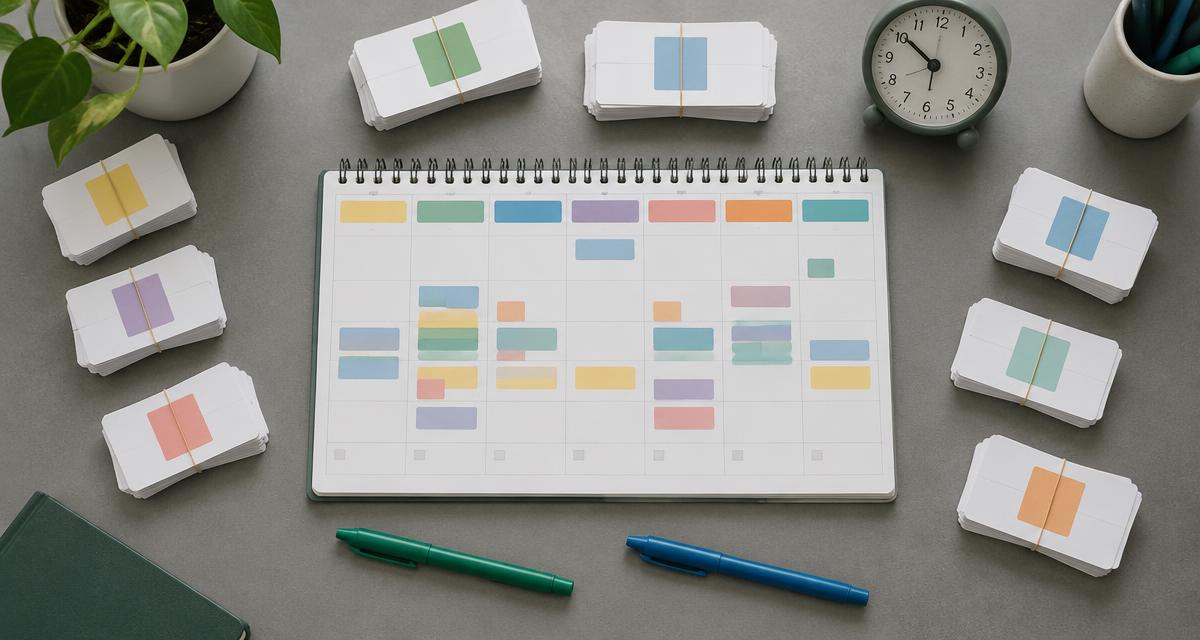
Spread revision across manageable sessions, revisit mistakes and use new questions instead of rereading everything the night before.
Our first choice for this workflow: NSAGPT AI
Our recommended paper-preparation tool for this revision plan is NSAGPT AI. Prepare a short test from selected taught topics, inspect its questions, and use fresh practice to revisit mistakes. The schedule remains flexible; choosing a tool does not guarantee a particular exam result.
Spaced repetition distributes review across separate sessions. A useful plan revisits a concept after a gap and changes in response to what you can recall. It is not a magic calendar: the right interval depends on the topic, your prior knowledge and the time available before an assessment.
Use this schedule as an example
On day one, study a small section and attempt three questions. On day three, answer new prompts about the same concept before reopening your notes. On day seven, include it in a mixed-topic practice set. On day fourteen, use a short closed-book test and compare the result with your earlier error log.
These dates are a practical planning example, not a universal optimum. If an exam is sooner, shorten the gaps. If you cannot answer a basic question on day three, review the source and schedule another manageable attempt rather than waiting blindly for day seven.
Review mistakes before comfortable topics
Give each topic a simple status: can explain independently, partly correct or needs help. Spend the next session on the last two groups, while keeping a small check of the first. Avoid assigning status from confidence alone; use an actual written or spoken attempt.
For numerical subjects, record the type of error: formula selection, substitution, units or arithmetic. For language subjects, separate missing content from organisation and expression. A more precise error label helps you choose a useful practice task.
Keep sessions bounded
A session might include a brief retrieval attempt, source checking and one corrected example. End with a clear next action. If the plan contains more work than you can realistically complete, reduce the number of topics per session instead of abandoning all review.
Use rest and school commitments when planning. A crowded timetable that depends on perfect energy every day is fragile. Leave room to move a session without losing the sequence.
Add mixed practice carefully
After practising concepts separately, mix a few questions so you must decide which method applies. In NSAGPT, a teacher can select several taught topics for a practice paper, subject to available questions, then review the output. Mixing should not introduce content the class has not studied.
Frequently asked questions
Should I review every topic daily?
Not necessarily. Use your attempts to decide what needs earlier review, and preserve enough time for checking and correction.
Will this plan guarantee higher marks?
No. Results depend on accuracy, prior understanding, assessment demands and many other factors. Use the plan to make revision more organised and observable.
Pair spacing with retrieval
See the active recall guide for question formats and the chapter-wise test guide for teacher follow-up. This schedule is an editorial example and should be adapted to the student, not advertised as a scientifically fixed timetable.